
Let's Talk Turkey
Thanksgiving Day is fast approaching, a time when Americans celebrate the year’s harvest, their blessings, and the company of loved ones. The turkey, now a centerpiece of the Thanksgiving table, has a long history of domestication that began with the Native Americans in Mexico and the southern United States and was further developed by the Spaniards who introduced the bird to Europe. The English name “turkey” is thought to have originated in England, where the bird was mistakenly associated with similar birds that had been imported from Africa via Turkey. Evidence of domesticated turkeys has been found in indigenous Mesoamerican settlements dating back over 2,000 years.
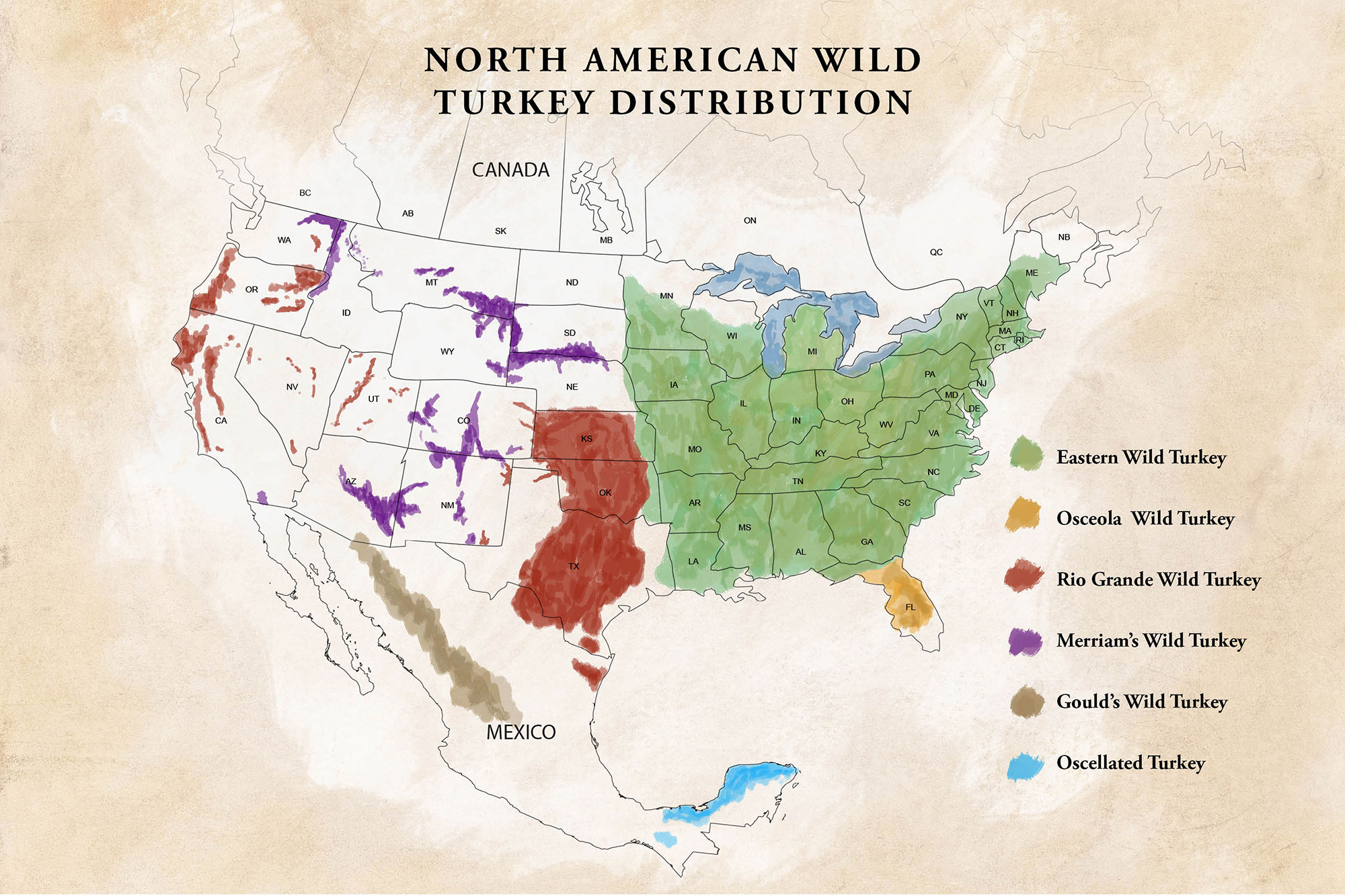
In the New World, there are two existing turkey species: the wild turkey of North America (Meleagris gallopavo) and the ocellated turkey (Meleagris ocellatus) found in Mexico and Belize. The wild turkey in North America is further divided into five subspecies, each with a distinct geographic range: the Eastern wild turkey (M. g. silvestris), Osceola turkey (M. g. osceola), Rio Grande wild turkey (M. g. intermedia), Merriam’s turkey (M. g. merriami), and Gould’s turkey (M. g. mexicana). In Central Florida, both the Eastern and Osceola turkeys can be observed.
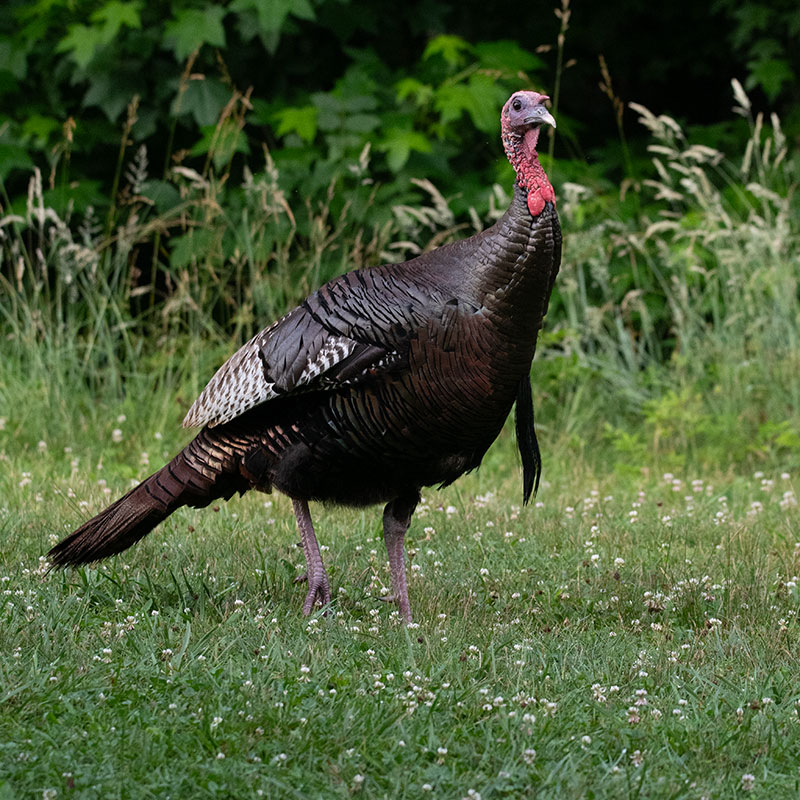
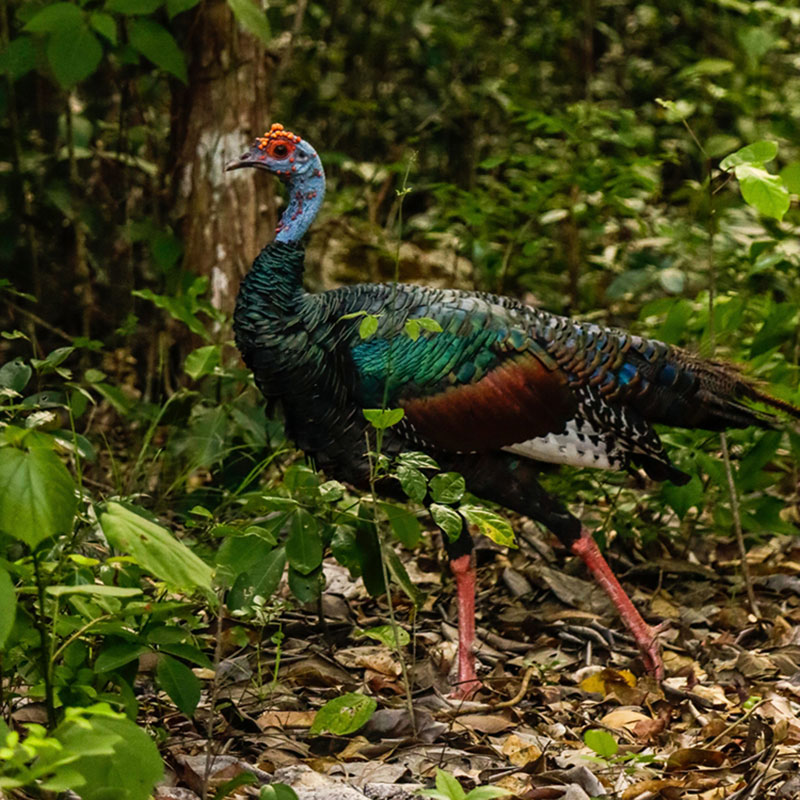
Turkeys are naturally inquisitive birds, exploring their surroundings in search of food. Along the Ocklawaha River, they can be seen foraging in open areas and forested zones for insects, fruits, seeds, and small reptiles. Despite common misconceptions and their considerable weight, wild turkeys are skilled fliers, reaching speeds of up to 60 miles per hour in level flight. Most turkeys roost high in trees at night and can skillfully maneuver sharp turns while flying through branches. Males are larger than females with a weight of up to 24 pounds while the females remain at nearly half that size.
In early spring, male turkeys, or toms, display their fan-like tail feathers in open areas to attract females, known as hens. Their iridescent feathers are the result of structural colors, cells that reflect a gamma of colors by splitting white light rather than pigmented cells. Toms gobble, purr and lower their wings in the presence of hens. A hen shows her choice by sitting low before the male, signaling her readiness for mating. Afterward, the female selects a safe, secluded spot to lay her eggs, while the male continues searching for other mates. The hen will lay up to 10 eggs, one per day, with incubation starting once the final egg is laid and lasting about 28 days until all the eggs hatch nearly simultaneously. The precocial chicks can walk within minutes of hatching, a trait that helps them avoid predators. From that point on, they accompany their mother, foraging under her watchful protection.
For the first two weeks of life, turkey poults will roost on the ground until they develop the flight feathers necessary to fly to a tree roost. During this time, they favor grassy habitats that provide cover from predators. As adults, turkeys prefer open grasslands, relying heavily on their keen vision to detect potential threats. Occasionally, they may climb trees to feed on buds or fruits.
Males can be identified by their beards and the presence of spurs. Additionally, a turkey’s gender can be determined by the shape of its droppings—J-shaped for males and spiral-shaped for females. A male’s age can be estimated based on the length of its beard and the size of its spurs. Birds with beards longer than 10 inches are around 3 years old, while those with beards measuring 3-5 inches are about one year old.
Due to hunting pressure and habitat loss, the wild turkey population in the United States was nearly wiped out by the early 1900s, with only about 200,000 birds remaining. Today, thanks to conservation efforts like bird translocation and land protection, the population has rebounded to an estimated 6.5 million. However, the species is still declining in some areas due to ongoing land development. While Florida’s turkey population appears stable, ensuring the species’ long-term survival in a constantly changing environment remains crucial. Projects like the O2O Corridor and the Florida Wildlife Corridor are vital for the future of wildlife in Florida.
Interested in seeing wild turkeys in Central Florida? Great spots to catch a glimpse of these unique birds include the Ocklawaha Prairie Restoration Area, Silver Springs State Park, Kissimme River State Park, Ocala National Forest, and the Caravelle Ranch Wildlife Management Area. For more information on turkeys, explore the links below.
About The Thanksgiving Tradition
Thanksgiving is one of the most cherished traditions in the United States, a time when families and friends gather to express gratitude, share a meal, and celebrate the blessings of the past year. Its origins are commonly associated with the 1621 harvest gathering shared by English settlers and members of the Wampanoag Nation in Plymouth, Massachusetts, although Indigenous peoples had practiced harvest celebrations for centuries before European settlers arrived. In 1863, President Abraham Lincoln proclaimed a national Thanksgiving observance, and today the holiday is celebrated on the fourth Thursday of November. The turkey, a bird native to North America, eventually became the centerpiece of the traditional Thanksgiving dinner, accompanied by stuffing, cranberry sauce, sweet potatoes, and pumpkin pie. Interestingly, there is no definitive evidence that turkey was served at the famous 1621 gathering.
The United States is not alone in celebrating a tradition of giving thanks. Canada celebrates Thanksgiving on the second Monday of October and, much like its southern neighbor, traditionally serves roasted turkey with many of the same side dishes. In Liberia, West Africa, Thanksgiving was introduced by formerly enslaved African Americans who settled there during the 19th century, although roasted chicken and cassava are more common than turkey. Germany celebrates Erntedankfest, a harvest festival featuring religious services, parades, and communal meals. South Korea observes Chuseok, a celebration of the harvest that honors ancestors and brings families together, while China celebrates the Mid-Autumn Festival with family gatherings and traditional mooncakes. In Brazil, Thanksgiving (Dia de Ação de Graças) is also observed, although it is not widely celebrated, and some families enjoy a traditional turkey dinner.
Despite their different origins, customs, and culinary traditions, these celebrations share a universal sentiment: appreciation for the abundance that nature provides, the importance of family and community, and the opportunity to give thanks for life’s blessings.