GALAPAGOS ISLANDS
Aug 26, 2026 - Sep 05, 2026
|
As we get closer to our Galápagos adventure, I wanted to check in and make sure everyone has booked their flights. If you haven't done so yet, I encourage you to book soon, as airfare prices are expected to rise as airlines work through their previously locked-in fuel costs.
|
I'd also like to take this opportunity to answer a few questions that several participants have asked.
|
- Dry landings vs. wet landings: A dry landing, you basically jump from the "panga" — inflatable boat — to dry land. On a wet landing, your feet will get wet. You either take your shoes off and jump in the water close to shore. Alternatively you can bring water shoes, but it will depend whether we go on a hike that requires better hiking shoes.
- How long and difficult are the hikes?
|
Most trails are relatively short, typically under a mile in length. The terrain can be rough, with uneven surfaces and sharp volcanic rock, so sturdy walking or lightweight hiking shoes are a good idea. The equatorial sun is strong year-round, and many trails offer little to no shade, so hats and sunscreen are a must.
|
- How much snorkeling are we doing? We'll snorkel pretty much every day—at least once, and often twice. Typically, we head out early in the morning for a trail walk before the other groups arrive. After that, we go snorkeling around 10:00 a.m. and return to the boat by 11:00–11:30 a.m. for lunch. In the afternoon, we may go snorkeling again around 3:00 p.m., return to the boat briefly, and then head back out for another trail excursion around 3:30 or 4:00 p.m.
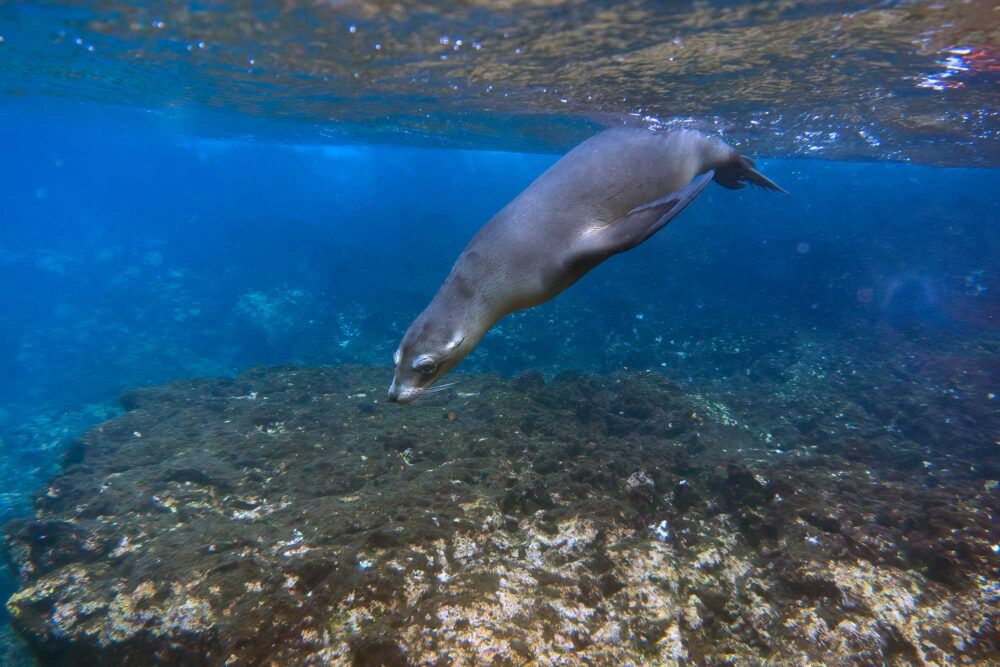
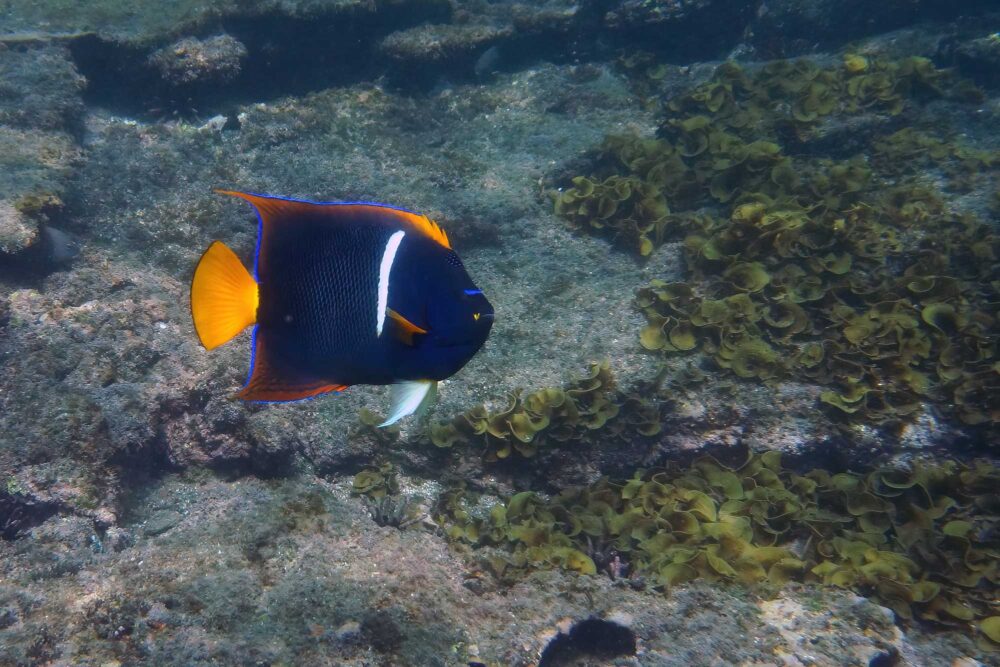
- Should I bring an underwater camera? Absolutely! A GoPro on an extension pole works great for capturing footage of the curious sea lions and lets you get closer to more elusive subjects, such as King angelfish and Galápagos penguins, without disturbing them.
|
|
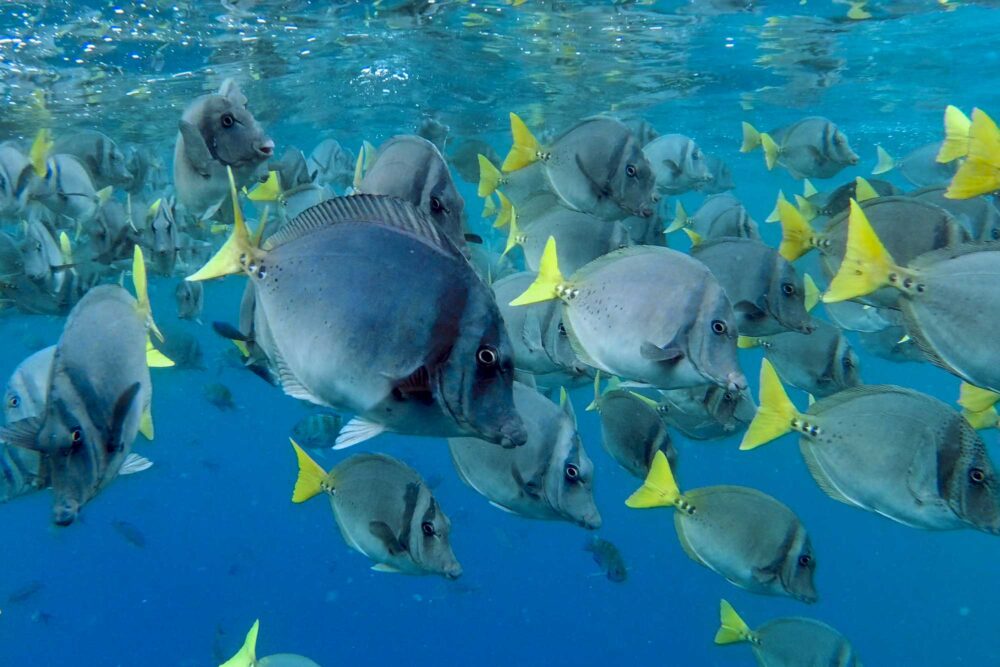
Here are some good reasons to go underwater.
|
|
|
|
|
|
|
|
|
|
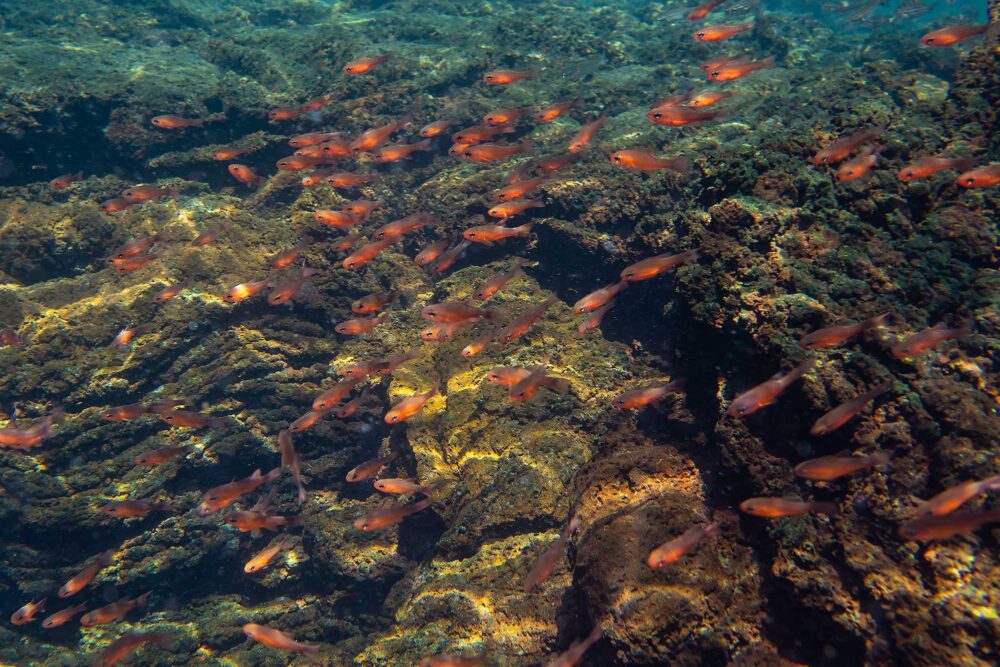
A school of Cardinal fish
|
|
|
|
|
|
|